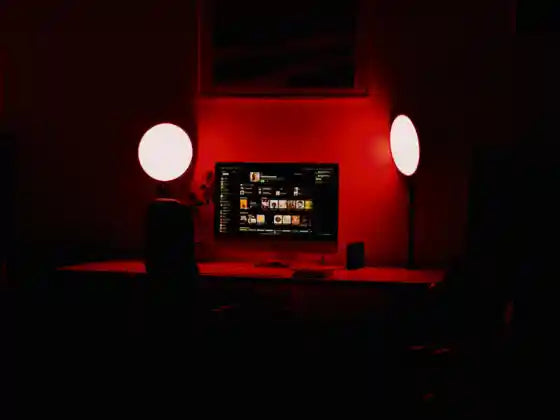


How To Not Be Productive - A Field Manual for Modern Light Environments
If your goal is to think slower, feel heavier, and struggle to sustain focus.
The modern world is already on your side.
You do not need to sabotage yourself.
You simply need to leave the environment as it is.
Stay indoors.
Stay under flickering artificial light.
Stare into bright screens after the sun has set.
Avoid the direct sunlight.
Ignore timing.
Ignore sequence.
When you feel foggy, restless, tired but wired, and unable to focus, that is not failure.
That is the modern system working as designed.
This is a field manual for unproductivity.
A guide to using modern light.
Exactly the way it is currently deployed.
The Modern Problem Is Not Motivation
It Is Signal Loss
Productivity is treated as a mindset problem.
Focus is framed as discipline.
Fatigue is moralised as laziness.
None of that holds up under biology.
Human performance is regulated upstream by environmental signals.
Light is one of these primary signals.
When light is mistimed, incomplete, or distorted, the nervous system does not optimize.
It defends.
And the result looks like poor productivity.
But the cause is loss of biological instruction.
INDEX: Step I. Spend Your Days Under Static Light
Step II. Embrace the Flicker
Step III. Filter Out the Sun
Step IV. Light Up the Night
Step V. Seperate Yourself From the Sky
Step VI. Ignore Your Mitochondria
Step VII. Treat Lighting As Decoration
Final Step. Stay Indoors and Wonder Why You're Tired
The Simple Fix.
Step I. Spend Your Days Under Static Light
If you want to dismantle alertness, consistency is your ally.
Keep your workspace uniformly lit.
Flat.
White.
Shadowless.
Disconnected completely from the sun.
Natural daylight is dynamic.
Its spectrum and intensity shifts hour by hour.
Morning light carries strong cyan blue and green wavelengths that anchor circadian clocks.
Midday light increases intensity and metabolic drive.
Late afternoon shifts warm, signalling a gradual downregulation.
Indoor lighting does none of this.
The majority of LEDs and fluorescents sit at a fixed colour temperature and fixed intensity.
To your biology, it is always the same time of day.
Chronically underlit during the day.
Wildly overlit in the evenings.
The brain’s timekeeping systems lose reference.
Melatonin timing drifts.
Cortisol rhythms flatten.
Mitochondria misread cellular time.
You feel tired without feeling calm.
Alert without clarity.
If you want to damage internal timing.
Choose uniformity.

Step II. Embrace the Flicker
Flicker is easy to ignore because most people cannot consciously see it.
Your nervous system still detects it.
Most modern LEDs, screens, and office luminaries pulse on and off hundreds to thousands of times per second. This is how they manage brightness.
Each pulse forces the visual system to recalibrate.
One source may be manageable.
Multiple sources compound.
Phones flicker differently from laptops.
Laptops differently from monitors.
Monitors differently from overhead lights.
The result is a nervous system flooded with asynchronous signals.
Opsins, the light sensitive proteins in the retina, skin, and blood vessels, evolved under continuous sunlight.
They translate photon input into instructions for metabolism, hormone timing, and cellular repair.
Feed them unstable light and noise enters every system that depends on light based signalling.
The result?
- Headaches
- Eye strain
- Cognitive drift
- Subtle fatigue that never resolves
To stay unproductive, keep staring into pulsing rectangles.
Step III. Filter Out the Sun
If you’re searching for energy suppression, stay indoors.
Move between house, car, office, and gym without exposing your skin or eyes to the open sky.
Draw the blinds.
Avoid morning light.
And definitely do not get multiple hours of sunlight per day.
The body does not use light for vision alone.
It uses light as biochemical data.
Early daylight activates melanopsin in the retina.
Melatonin is suppressed.
Cortisol rises naturally.
Reaction time and coordination improve.
Without that exposure, the body assumes night persists.
You can flood your environment with screens and ceiling lights and still fail to deliver the solar signal.
Sunlight delivers a near-continuous spectrum, with the biologically dominant range spanning roughly 400 to 1000 nanometers.
Violet through blue, green, red, and into near infrared.
Indoor light delivers a narrow, spiked fraction of that range.
Without full spectrum input, mitochondrial complexes operate below capacity.
ATP output drops.
Energy feels thin and unstable.
If sluggishness is your goal, avoid the sun.
Step IV. Light Up the Night
For maximum circadian disruption, treat night like day.
Keep overhead LEDs bright.
Scroll under blue heavy screens until sleep.
Ignore spectral shift.
Several opsins involved in circadian timing respond strongly to short wavelength light.
When those receptors are stimulated after sunset, biological night is delayed.
Melatonin release shifts later.
Sleep onset drifts.
Deep sleep is reduced.
Over time, the rhythm slips entirely.
You wake unrefreshed.
Cortisol peaks late.
Cognitive performance degrades across the day.
This is not solved by darkness alone.
Warm, amber shifted environments signal closure.
Red and near infrared allow visual comfort and cellular support without activating circadian machinery.
To stay misaligned, keep the lights bright and cold after the sun sets.

Step V. Separate Yourself From the Sky
Humans orient towards light.
Attention follows direction, contrast, and depth.
Most modern interiors treat light as a utility.
Placed for efficiency and cost, not biology.
Uniform overhead lighting removes directionality.
No gradients.
No visual flow.
This flatness suppresses dopamine pathways involved in motivation and spatial awareness.
Engagement drops.
Movement feels heavier.
Focus fragments.
If you want to remain unfocused, detach light from behaviour.
Make it static.
Sterile.
Aimless.
Step VI. Ignore Your Mitochondria
Productivity is not a psychological story.
It is an energy story.
Energy begins in the mitochondria.
They respond directly to light, particularly red and near infrared wavelengths.
Those wavelengths support electron transport, redox balance, and cellular repair.
When light environments lack these wavelengths, energy production becomes inefficient.
Fatigue accumulates even without exertion.
Ignore this connection and treat exhaustion as a character flaw.
Your output will follow your energy.

Step VII. Treat Lighting as Decoration
When light is reduced to aesthetics, performance suffers.
The body does not respond to how light looks.
It responds to what light communicates at a cellular level.
It understands wavelength input.
Endocrine function.
Immune signalling.
Neural timing.
All of it references light.
To stay unproductive, assume light is background noise.
Final Step. Stay Indoors and Wonder Why You’re Tired
If you have followed this manual, the results may feel familiar.
Low energy.
Poor focus.
Inconsistent sleep.
Brain fog that no amount of caffeine resolves.
You avoided the sun.
You embraced the flicker.
You blinded your circadian system.
If that is how you are feeling.
Then you know you followed their instructions correctly.
The Simple Fix.
If any of this describes your daily environment, reversal is possible.
Not through hacks.
Through alignment.
Rebuild light environments around biological reality.
Restore timing.
Restore spectrum.
Remove flicker.
Respect sequence.
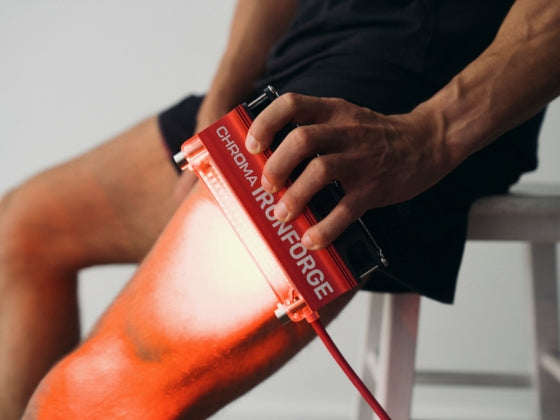
Chroma builds tools to support that process.
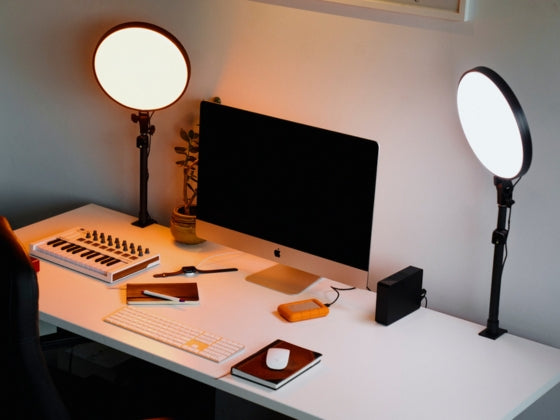
- Daytime lighting designed around blue and cyan weighted spectra used in alertness oriented environments.
- Red and near infrared wavelength ranges selected for inclusion in recovery oriented light routines.
- Evening lighting designed to maintain low stimulus conditions during the biological night.
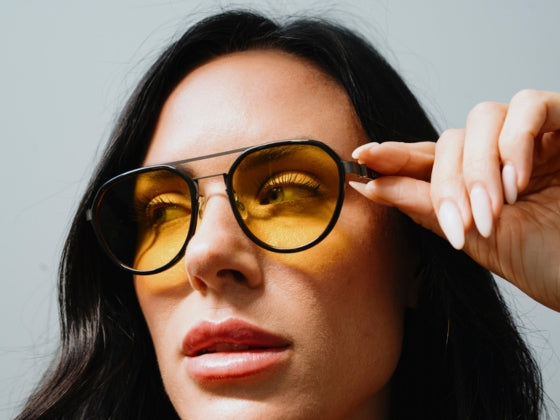
- Physical filtering solutions designed to reduce nighttime exposure to specific wavelength ranges.
Without the sun guiding our evolution, life would not be possible.
So why should today be any different?
Light should not drain you.
It should train you.
And when the body stops defending itself from bad signals.
Your capacity returns.