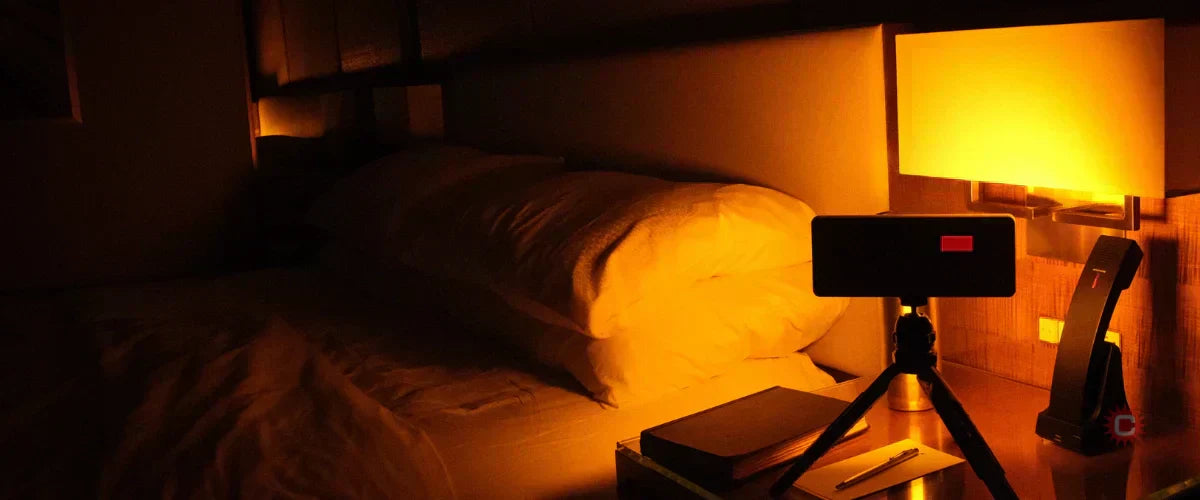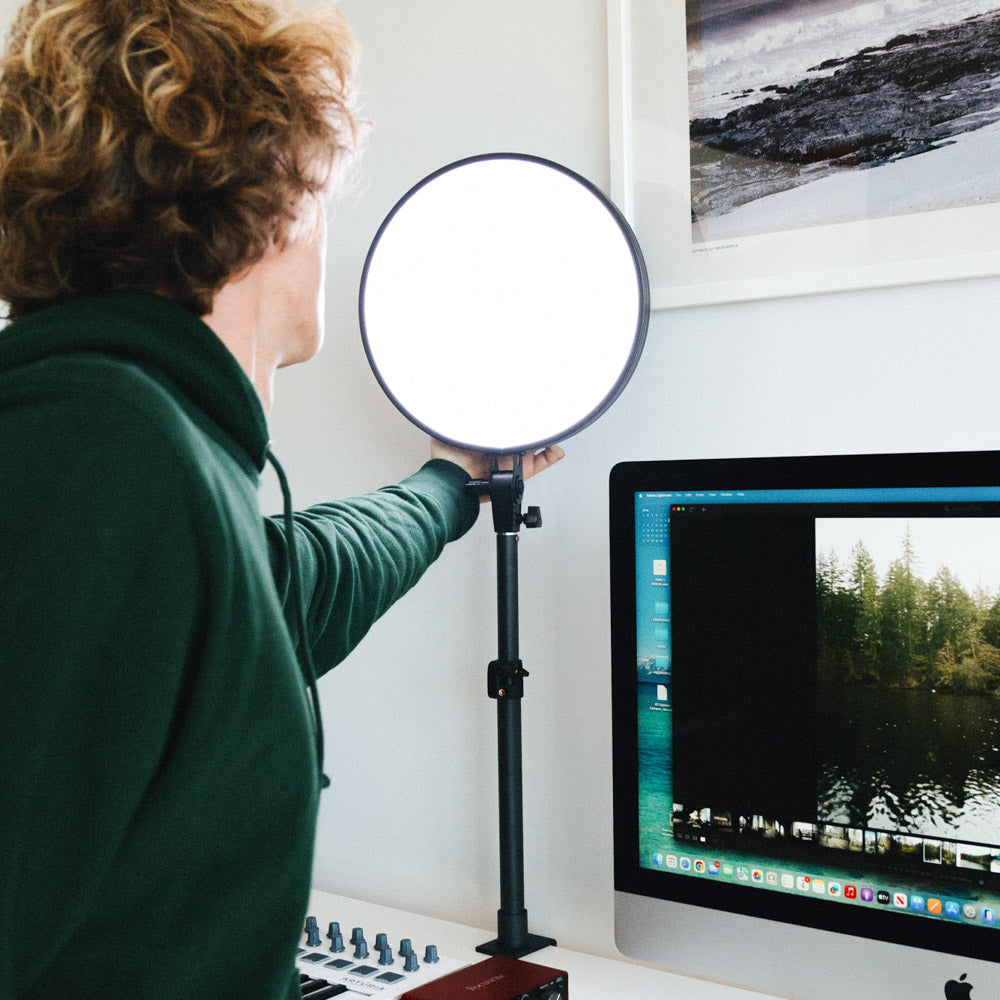


Let's start with something simple.
Have you ever spent a day outside at the beach, hiking, working in the yard and come home feeling great? Not sunburned, just... better? More relaxed, sleeping deeper that night, joints a little less stiff the next morning?
That wasn't just the fresh air.
Sunlight is roughly 60% Red and NIR light, with 40% red and near-infrared light in the 600–900nm range. The same wavelengths used in every red light therapy device on the market. At ground level on a clear day, the sun delivers about 35 mW/cm² in this band, the exact therapeutic window we focus on with the Ironforge. Spend an hour outside and your exposed skin absorbs around 90-120 J/cm² of red and NIR photons. Spend a full day outdoors and you're looking at 300 to 700+ J/cm².
Even under a tree canopy where leaves absorb most visible light but transmit roughly half of the near-infrared, you're still accumulating a substantial NIR dose throughout the day. Factor in diffuse skylight and ground reflections, and shaded outdoor exposure delivers roughly 8-15 mW/cm² of red and NIR to your skin. Six hours of that? About 170-320 J/cm². That's more than most clinical red light therapy protocols deliver per session.
And nobody has ever worried about getting "too much" red light from a day outside.
This is the context that's almost always missing from online debates about device power. So let's build from here.
Your body is a photon counter
Here's the key insight that changes the whole conversation: as long as you’re not overheating, your cells don't care how fast the photons arrive. They care how many show up.
When red and near-infrared photons hit cytochrome c oxidase, one of the structures in your mitochondria that absorb these wavelengths, each photon triggers the same molecular event regardless of whether it arrived in a concentrated burst or a slow trickle. The enzyme accepts a photon, releases nitric oxide, and allows the electron transport chain to run more efficiently. One photon, one event.
This is why sunlight works as a source of PBM-range stimulation despite delivering relatively low irradiance. It makes up for it with hours of exposure. And it's why a high-power device can achieve equivalent results in minutes instead of hours.
Same total photon count, but a compressed timeline.
The formal term is the Bunsen-Roscoe reciprocity law: for photochemical reactions, the biological effect depends on total dose (energy × time), not delivery rate. Researchers have tested this directly with PBM. Chung et al. delivered the same total energy dose to diabetic mouse wounds at three different irradiances spanning a 5× range and found equivalent wound healing across all groups. The cells didn't care about the delivery rate, they simply “counted photons.”
Now, reciprocity has limits. Push the irradiance extremely high (think 10× clinical norms) and you start to see diminishing returns, likely because you're outpacing the rate at which cytochrome c oxidase can cycle. But within the range that any commercial LED device operates, including high-power devices like ours, the evidence strongly supports the photon counter model.
The practical upshot: 850 mW/cm² for 2 seconds delivers roughly the same biological stimulus as 85 mW/cm² for 20 seconds. Both deliver ~1.7 J/cm². The photons don't come with a timestamp.
The one real limit: heat
The objection you'll see most often, usually citing a book or a blog post that references the Arndt-Schulz curve is the "biphasic response". The argument goes: low doses stimulate, high doses inhibit. Therefore, a powerful device must be delivering "too much" and causing harm.
The biphasic dose response is real. It's one of the most replicated findings in PBM research. But the way it gets applied to consumer devices is, frankly, wrong. Here's why.
Almost every study that established "inhibitory thresholds" was conducted on cells in a dish.
Hawkins and Abrahamse showed fibroblasts proliferate at 5 J/cm² but slow down at 16 J/cm². Sharma et al. (Hamblin's group at Harvard) found mitochondrial function decreased above 10 J/cm² in isolated neurons. These are solid studies. But they share a critical limitation: cells in a monolayer receive 100% of the applied irradiance with zero attenuation, and near zero heat dissipation.
Your skin is not a monolayer.
When 850nm light hits your body, roughly 5% bounces off the surface. Melanin in the epidermis absorbs another fraction. Then as photons enter the dermis, they scatter and attenuate exponentially. Published optical measurements show that within just the first millimeter of tissue, 850nm light loses 35-65% of its intensity. By 5mm depth, only about 2-18% of surface irradiance remains. By the time photons reach muscle at 10mm, we're talking only 1% to 5%.
An 850 mW/cm² device at the skin surface delivers maybe 300 mW/cm² to cells 1mm deep, perhaps 100 mW/cm² at 2mm, and single-digit mW/cm² at muscle depth. The cells that the biphasic studies were worried about? They're seeing a fraction of what the surface measurement suggests.
Researchers who understand this distinction (including Hamblin himself) have explicitly recommended surface fluences of 10 to 50 J/cm² for deep tissue targets, precisely because so much is lost in transit. Mignon et al. published a 2017 paper in Scientific Reports showing that cell culture conditions themselves (atmospheric oxygen, serum concentration, confluency) alter PBM outcomes so dramatically that the authors called in vitro (cell culture) results "a significant source of problematic interpretations." For a broader take on how cell culture studies inflate danger narratives, applied to UV rather than PBM, see The Dish Lie.
Huang et al.'s own landmark review of biphasic effects noted the telling asymmetry: they found many reports of biphasic responses in cell cultures, some in animal experiments, but zero clinical reports of inhibitory overdosing in humans. Not because nobody looked, but because living tissue with blood flow, thermal regulation, and optical filtering simply does not behave like cells under a microscope.
High fluence works. The clinical evidence is clear.
If the "1 to 10 J/cm² is the therapeutic window" claim were true, wouldn't some of the most successful PBM protocols in the world would be failures?
But they work.
The strongest evidence comes from the STARS trials by Jagdeo's group. This is the only systematic dose-escalation safety study for LED red light on human skin. 115 subjects across two trials received (633nm) at fluences of 160, 320, and 480 J/cm². 320 J/cm² was safe for all skin types. Dose-limiting events first appeared at 480 J/cm² in STARS 1 (a single blister in one subject with darker skin), establishing 320 J/cm² as the maximum tolerated dose for all skin types. In STARS 2, which enrolled only non-Hispanic Caucasians, dose-limiting events occurred at 640 J/cm² in 2 of 55 subjects and resolved without issue.
Even more telling: in the follow-on CURES trial, 320 J/cm² produced a 77.8% reduction in scar induration on the treated side versus 50% on the control side, the best result of any dose tested. Notably, the highest dose arm (480 J/cm²) showed no improvement over control, consistent with a biphasic response in this specific tissue-repair context, but notabily orders of magnitude higher than the claimed therapeutic window often cited.
The broader dermatology literature tells the same story. Skin rejuvenation protocols using 126 J/cm² of 633nm light show significant wrinkle improvement. Acne studies using combined blue (415nm, 48 J/cm²) and red (633nm, 96 J/cm²) LED therapy show 77.9% improvement in inflammatory lesions at 12 weeks (Goldberg & Russell, 2006). Wound healing studies at 60 J/cm² of 830nm show 50% faster recovery than controls.
In sports medicine, Vanin et al.'s meta-analysis recommends 60 to 300 joules for large muscle groups. Rugby players receiving 510J per limb showed significantly improved sprint times and reduced fatigue. Class IV laser therapy delivers hundreds of joules per session across 56 studies (n=1,486 HILT vs n=1,494 controls) and reported zero serious adverse events.
NASA's LED research by Harry Whelan's group reported zero adverse events while documenting >40% improvement in Navy SEAL musculoskeletal injuries and 50% faster wound healing in submariners.
This is mainstream PBM research at institutions like Harvard, UC Davis, NASA, and the World Association for Photobiomodulation Therapy. And the doses are far, far above the thresholds that concern trolls online claim are harmful.
The evolutionary argument: we're starved for red light, not drowning in it
Here's what ties it all together.
Cytochrome c oxidase, the mitochondrial enzyme that PBM targets, has absorption peaks at ~660nm and ~830nm. It's conserved across virtually every aerobic organism on the planet. Fruit flies have it. Bees have it. You and I have it.
This enzyme evolved under a sun that delivers massive amounts of red and NIR light every day. For most of human history, people spent the majority of their waking hours outdoors, accumulating hundreds of J/cm² of red/NIR daily. Plants amplify this, chlorophyll absorbs visible light but reflects 40–50% of near-infrared, making forest and grassland environments even richer in NIR than open sky proportionately.
Professor Glen Jeffery at University College London has published compelling work showing that NIR from sunlight passes through the human body and produces systemic effects including improved visual function, even when light reaches the body through clothing and away from the eyes. His group has demonstrated PBM effects across species from Drosophila to humans. In one recent study, just 15 minutes of 670nm light reduced blood glucose by 28% after a glucose challenge.
The modern indoor environment is the anomaly, not our light devices. Standard LED and fluorescent lighting peaks at ~450nm (the peak of the blue light hazard zone, no less) with virtually zero emission above 660nm (or below ~420nm but we'll get into the other end of the spectrum in another post.). We've engineered red and near-infrared light almost entirely out of our daily lives. From an evolutionary perspective, light therapy isn't adding something foreign, it's restoring something missing.
This framing matters because it shifts the question. The relevant concern isn't "am I getting too much red light?" It's "am I getting enough?" And the answer for anyone spending most of their day indoors is almost certainly: not a chance…
So where does the Ironforge fit?
The Ironforge delivers roughly 850 mW/cm² at the faceplate across five wavelengths (630, 660, 760, 810, and 850nm), with about 75% of output in the NIR range. That's a lot of power in a small package, and we understand why the number raises eyebrows if you're used to seeing "recommended" irradiances of 50 to 100 mW/cm².
But now you have the context to understand why that number, in isolation, tells you almost nothing about safety or efficacy.
For body treatments (at the faceplate, sweeping motion): each point on your skin sees the beam for A few seconds per pass. At 850 mW/cm², that's roughly 1 to 3 J/cm² per pass, solidly in the middle of even the most conservative therapeutic window. With multiple passes over 1 to 3 minutes per area, you accumulate 60 to 500 J/cm² in the target zone. That matches the dose ranges where STARS, sports medicine, and wound healing studies show the strongest results.
For face treatments (at arm's length, ~60cm): physics does most of the work for you. At that distance, irradiance drops to approximately 15 to 40 mW/cm² matching the also well marketed NovoThor full-body pod, one of the most clinically studied PBM devices in the world. Combined with sweeping motion, even a generous session delivers moderate, thoroughly studied fluences to facial skin.
Skin filtering does the rest. Even at contact distance, tissue optics reduce the cellular-level irradiance to a fraction of the surface number. Your dermis, your blood, your melanin are all evolved photon management systems doing exactly what they've been doing for millions of years.
The bottom line
We get that high numbers can feel scary. We get that a popular book raised concerns, and we take those concerns seriously. But when you look at reality from first principles rather than cherry-picked in vitro thresholds, the picture is clear:
Your body was built to handle MASSIVE daily doses of red and near-infrared light. It did so for the entirety of human evolution. The biphasic "danger zones" cited online come overwhelmingly from cell culture studies that don't account for tissue optics, blood flow, or thermal regulation. The highest-quality human safety data (phase I dose-escalation trials) shows skin tolerates LED light at 320+ J/cm² without harm. And the clinical literature from Harvard, NASA, and dozens of other institutions shows that these higher doses often produce the best results.
The real safety boundary is thermal, not photochemical. If you're keeping the device moving and not feeling uncomfortable heat, you're well within safe parameters. That applies to the Ironforge, and it applies to every red light therapy device on the market.
We designed the Ironforge to give you enough power to actually make a difference in a reasonable amount of time. The same way a day outside makes a difference, just concentrated into minutes instead of hours. Same photons. Same biology. Just a more efficient delivery system.
Use it as directed. Keep it moving. Use distance for sensitive areas to reduce irradiance. And if anyone tells you that you can get "too much" red light from a properly used LED device, ask them if they've ever worried about spending a day in the shade.
As always, the Ironforge is a general wellness device, not a medical device. We don't make medical claims. What we do is build devices grounded in physics and backed by research and we believe you deserve to understand the science behind what you're using. If you have a specific medical condition, consult your healthcare provider.
References & Further Reading
-
Huang YY, Sharma SK, Carroll J, Hamblin MR. "Biphasic Dose Response in Low Level Light Therapy — An Update." Dose-Response, 2011. The landmark review of biphasic effects noting the absence of clinical reports of inhibitory overdosing.
-
Jagdeo J, et al. "Safety of light emitting diode-red light on human skin: Two randomized controlled trials." Journal of Biophotonics, 2020 (STARS trials). Phase I dose-escalation demonstrating safety at 320–480 J/cm².
-
Jagdeo J, et al. "Light emitting diode-red light for reduction of post-surgical scarring." Journal of Biophotonics, 2021 (CURES trial). Phase II efficacy data showing 77.8% reduction in scar induration at 320 J/cm² vs. 50% in controls (30 facelift patients); 480 J/cm² showed no benefit over control.
-
Zein R, Selting W, Hamblin MR. "Review of light parameters and photobiomodulation efficacy: dive into complexity." Journal of Biomedical Optics, 2018. Comprehensive review recommending 10–50 J/cm² for deep targets and noting the inadequacy of fixed dose thresholds.
-
Mignon C, et al. "Photobiomodulation of human dermal fibroblasts in vitro: decisive role of cell culture conditions." Scientific Reports, 2017. Demonstrates that in vitro conditions create artifact dose-response curves.
-
Chung H, et al. "Dose-response study of 660nm low-level laser therapy on diabetic wound healing." Lasers in Surgery and Medicine, 2012. Shows equivalent outcomes across a 5× irradiance range at constant fluence.
-
Vanin AA, et al. "Photobiomodulation therapy for the improvement of muscular performance and reduction of muscular fatigue." Lasers in Medical Science, 2018. Meta-analysis recommending 60–300 J for large muscle groups.
-
Russell BA, Kellett N, Reilly LR. "A study to determine the efficacy of combination LED light therapy (633nm and 830nm) in facial skin rejuvenation." J Cosmetic and Laser Therapy, 2005. PMID 16414908 126 J/cm² protocol with significant wrinkle improvement.
-
Calderhead RG. "830nm LED phototherapy in the treatment of wound healing." Laser Therapy, 2013–2016 series. Documents optimal outcomes at 60 J/cm² with 830nm LEDs.
-
Jeffery G, et al. "Longer wavelengths in sunlight pass through the human body and have a systemic impact which improves vision." Scientific Reports, 2025. Evidence that solar NIR produces systemic biological effects through tissue penetration.
-
Powner MB, et al. "Light stimulation of mitochondria reduces blood glucose levels." Journal of Biophotonics, 2024. 670nm exposure for 15 minutes reduced blood glucose by 27.7% post-challenge.
-
Whelan HT, et al. "Effect of NASA Light-Emitting Diode Irradiation on Wound Healing." J Clinical Laser Medicine & Surgery, 2001. PUBMED 11776448 The foundational NASA LED study in military applications.
-
Pinto HD, et al. "Photobiomodulation Therapy Improves Performance and Accelerates Recovery of High-Level Rugby Players." J Strength Conditioning Research, 2016. 510 J per limb with significant performance benefits.
-
Ablon G. "Combination 633nm and 830nm LED treatment of psoriasis." Photomedicine and Laser Surgery, 2010. 186 J/cm² combined protocol with 60–100% clearance.
-
ASTM G173-03 Reference Solar Spectral Irradiance (AM1.5G). Standard reference for solar spectral power distribution at ground level.
-
Castano AP, et al. "Low-level laser therapy for zymosan-induced arthritis in rats: Importance of illumination time." Lasers in Surgery and Medicine, 2007. Evidence that minimum exposure time matters independently of fluence.
-
IEC 60601-1 (medical device thermal safety) and IEC 62471 (photobiological safety of LED products). International safety standards classifying red/NIR LEDs as Risk Group 0–1.