When that calibration drifts, sleep shifts with it. Energy shifts with it. Hormonal rhythms shift with it.
If the light environment remains misaligned, the system continues to compensate.
Resetting circadian rhythm does not begin with forcing sleep.
It begins with restoring the signal that sets biological time in the first place.
In this piece, we will cover:
- what resetting circadian rhythm biologically means
- how light shifts the internal clock
- why modern environments disrupt circadian timing
- how to design a reset protocol around light exposure
- where supplements fit and where they do not
INDEX:
- What Resetting Circadian Rhythm Actually Means
- Why Circadian Rhythm Gets Disrupted
- Designing a Circadian Reset Around Light
- Supplements, Melatonin, and Where They Fit
- Designing a Light Environment That Supports Circadian Timing
- Resetting Circadian Rhythm Means Resetting Your Light Environment

What Resetting Circadian Rhythm Actually Means
The Master Clock Responds to Light
The body’s central timing system is coordinated by a small cluster of neurons called the suprachiasmatic nucleus.
This structure sits above the optic chiasm and functions as the master clock.
It does not generate time independently.
It responds to light.
Specialized retinal cells detect short-wavelength light and send signals directly to this clock. This input determines whether internal timing shifts earlier, later, or remains stable.
Light exposure in the early part of the day tends to advance circadian timing.
Light exposure late in the evening tends to delay it.
This responsiveness to light is what allows the body to align with the external day–night cycle.
It is also what makes circadian rhythm vulnerable to artificial light environments.
What “Reset” Actually Refers To
When someone says they want to "reset" their circadian rhythm, they usually mean one of three things:
- falling asleep earlier
- waking without fatigue
- maintaining stable daytime alertness
These are outputs.
Resetting circadian rhythm refers to adjusting the phase of the internal clock so it realigns with the external light–dark cycle.
This process is known as phase shifting.
(Phase shifting: The adjustment of the body’s internal clock earlier or later in response to environmental light cues.)
If the clock is delayed, it must be advanced.
If it is advanced too far, it must be delayed.
Light determines the direction.
Hormones follow.
Melatonin is often treated as the master regulator of sleep timing. Biologically, it is a downstream signal of darkness. It rises when the circadian clock permits it to rise.
It does not override the clock.
Modern environments frequently invert natural light patterns:
- limited bright light during the morning
- prolonged indoor exposure during the day
- high-intensity artificial light after sunset
Over time, the internal clock adapts to the signal it receives.
Resetting circadian rhythm is not a matter of effort.
It is a matter of signal correction.
When light timing changes, biological timing follows.

Why Circadian Rhythm Gets Disrupted
Circadian timing does not drift randomly.
It shifts in response to repeated light signals.
When light exposure patterns change, internal timing adapts to match them.
Modern environments differ substantially from the light conditions under which human biology evolved. The difference is not subtle. It’s structural.
Late Artificial Light Exposure
The circadian system is particularly sensitive to light in the evening.
Short-wavelength enriched light after sunset signals to the brain that it is still daytime. When that signal is repeated nightly, internal timing gradually shifts later.
Common contributors are not extreme. They are ordinary.
Overhead lighting that stays bright well past sunset.
Screens viewed in otherwise dark rooms.
Homes and offices that remain visually “daylit” long after the sun has set.
One evening of this is not decisive.
Repeated nightly exposure is.
Melatonin onset drifts later. Sleep follows that drift. Over time, the shift feels normal because it becomes consistent.
The circadian system is not judging the source of the light. It is reading intensity, spectrum, and timing. A ceiling fixture at 10 pm can carry similar biological meaning to late afternoon daylight.
The clock responds to what it detects.
Insufficient Morning Light
Morning disruption is usually quieter.
The issue is not that people avoid light entirely. It is that exposure is delayed or diluted.
Waking before sunrise and staying indoors.
Moving from bedroom to kitchen to car without direct outdoor light.
Putting on dark lenses immediately after stepping outside.
Indoor lighting simply isn’t very bright compared to daylight.
Even on a cloudy morning, stepping outside exposes you to far more light than most homes or offices provide.
If the first part of your day passes in relatively dim light, the body does not receive a strong “start” signal. When that signal is weak, it becomes easier for evening light to push your timing later.
Inconsistent Wake Timing
The first meaningful light you see after waking has a strong impact on your internal timing.
When wake time moves by several hours between workdays and days off, that first signal moves with it.
Sleeping in late on weekends.
Alternating between early alarms and late starts.
Rotating schedules driven by work or social commitments.
Each shift nudges the clock.
Occasional variation is manageable. Repeated swings prevent the system from settling into a stable phase.
Competing Signals Throughout the Day
Circadian timing is not determined by a single exposure. It reflects how light is distributed across your day.
Low daytime light combined with bright evening light creates a consistent delay pressure.
When mornings stay dim and nights stay bright, the body begins to treat the day as if it starts and ends later.
Over time, this:
- shifts sleep onset
- reduces morning alertness
- alters hormonal timing
That is the system responding to the environment it is given.
Disruption is often adaptation.

Designing a Circadian Reset Around Light
Resetting circadian rhythm requires changing the pattern of light exposure across the day.
The goal is not to force sleep.
It is to shift the internal clock deliberately and consistently.
Circadian timing does not change all at once. With consistent light adjustments, internal phase can move meaningfully over several days. Larger jumps are possible, but stability improves when changes are controlled.
The reset process has five core components.
I. Fix Wake Time First
Wake time determines when the first meaningful light signal reaches the circadian system.
That signal anchors the rest of the day.
If wake time shifts daily, the light signal shifts with it. The clock is forced to repeatedly readjust.
Stabilising wake time:
- creates a predictable reference point
- strengthens the morning phase-advancing effect
- reduces cumulative delay across the week
Bedtime is often treated as the control lever.
Biologically, wake time carries more influence.
When wake time stabilises, sleep timing tends to follow.
II. Prioritise Early-Day Light Exposure
Morning light provides the strongest advancing cue to the internal clock.
Outdoor light exposure shortly after waking delivers a clear signal that the day has begun.
This does not require extreme measures.
It requires consistency.
Within the first hour of waking:
- seek natural daylight
- avoid prolonged time in dim indoor lighting
- allow sufficient brightness to reach the eyes
The goal is not perfection.
It is repetition.
A clear morning signal makes it harder for evening light to push timing later.
III. Reduce Evening Light Intensity
Evening light carries a delaying effect.
Reducing brightness after sunset decreases the signal that extends biological daytime.
Practical adjustments include:
- dimming overhead lighting
- favouring warmer light sources
- limiting bright screens in otherwise dark rooms
The aim is not total darkness.
It is lowering intensity enough that the clock no longer interprets the environment as midday.
Small reductions, applied consistently, compound over time.
IV. Keep Light Patterns Consistent Across the Week
Circadian reset is undermined when weekday and weekend light exposure differ dramatically.
Sleeping several hours later on days off pushes the morning light signal later as well.
If evenings also run brighter and longer, the overall pattern begins to drift.
The body does not reset on Monday. It carries that shift forward.
Keeping wake times roughly aligned across the week, getting light at similar times in the morning, and lowering brightness in the evening gives the clock a stable reference point.
Stability is what allows timing to settle.
V. Allow Biological Time to Adjust
Circadian timing changes through repetition.
Under consistent conditions, meaningful shifts often occur over several days rather than overnight.
Attempting abrupt change can fragment sleep temporarily.
Gradual, repeated signals tend to stabilise more reliably.
The clock adapts to patterns.
Consistency outweighs intensity.
Supplements, Melatonin, and Where They Fit
Supplements are often introduced when sleep timing feels misaligned.
The most common example is melatonin.
Melatonin signals darkness to the body. In certain contexts, and when timed appropriately, it can influence circadian phase.
It does not replace light exposure.
The circadian system responds most strongly to environmental light patterns across the day. If morning light remains weak and evening light remains strong, adding a supplement at night rarely produces lasting change.
This does not make supplements ineffective.
It places them in context.
They can reinforce a shift that is already being supported by light timing.
They cannot reliably override a conflicting light environment.
Circadian rhythm is regulated primarily by the light detected from morning through night.
Chemical signals follow that timing.
Environmental signals lead.
Designing a Light Environment That Supports Circadian Timing
Understanding circadian rhythm is one part of the equation.
Controlling the light environment is the other.
Modern indoor spaces rarely provide strong morning light. They often provide excessive evening brightness. That combination makes stable timing difficult to maintain.
Designing a supportive environment means shaping light intensity and spectrum across the day.
In the morning, the goal is sufficient brightness to clearly signal daytime.
In the evening, the goal is reducing intensity and short-wavelength emphasis so the clock can transition toward night.
Chroma systems are built around that principle.
The Chroma Trinity is designed to deliver controlled, biologically relevant light exposure during the day, supporting circadian anchoring and daytime alertness.
Our Skylight provides high-output, broad-spectrum illumination that more closely resembles outdoor daylight indoors, helping reinforce daytime signalling when natural light is limited.
The SkyPortal and SkyPortal Mini are engineered to simulate structured daylight patterns in enclosed or low-light environments, providing a consistent reference signal when architectural light is insufficient.
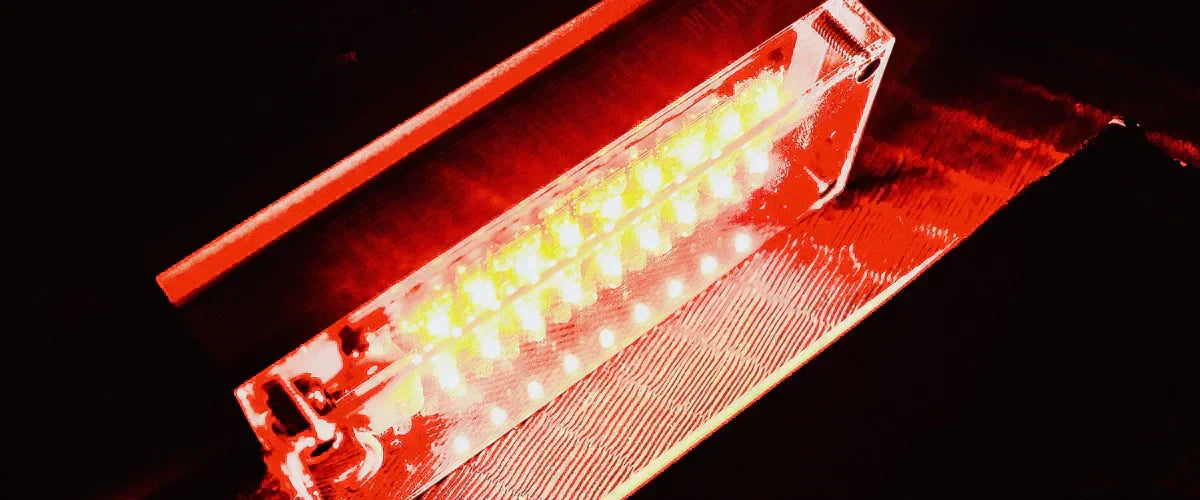
Our RedPortal is engineered for evening use, delivering long-wavelength dominant light that minimises circadian delay pressure while maintaining usable visibility after sunset.
These tools should not replace sunlight.
They help recreate the light patterns that circadian biology expects but modern environments often lack.
The objective is not more light at all times.
It's the right light at the right time.
When light timing is aligned, circadian stability follows.

Resetting Circadian Rhythm Means Resetting Your Light Environment
Circadian rhythm is not a fragile system.
It's adaptive.
It adjusts to the signals it receives most consistently.
When mornings are dim and nights are bright, internal timing shifts later.
When early light is strong and evening light is reduced, timing shifts earlier.
The system responds appropriately to its environment.
Disruption is often a reflection of design.
Resetting circadian rhythm does not require extreme intervention.
It requires alignment.
Wake time consistency.
Morning light exposure.
Evening light restraint.
Applied repeatedly.
Sleep improves as a consequence of corrected timing.
Hormonal rhythms stabilise as a consequence of consistent signals.
Energy becomes more predictable because the internal clock is no longer compensating.
Circadian rhythm is not controlled at bedtime.
It is shaped from the moment light reaches the eyes in the morning.
When the light environment changes, biological time recalibrates.
Resetting your circadian rhythm ultimately means resetting the light pattern your body experiences every day.
Everything else follows.